How to Start Learning at Home Without Overplanning 🌱
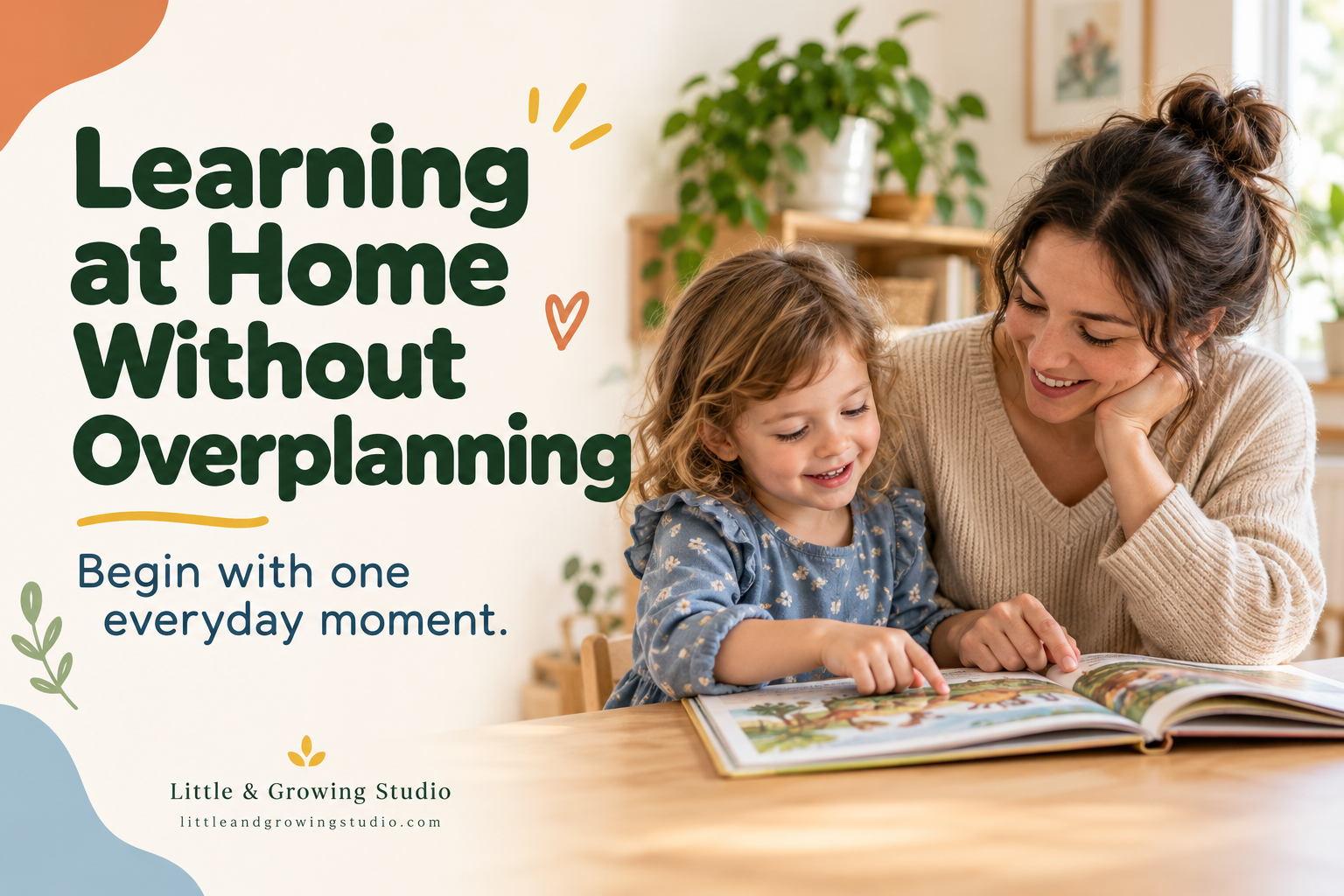
Simple ways to turn everyday moments into opportunities for connection, curiosity, and discovery.
You sit down to plan a few activities for your child. A quick search brings up beautiful learning shelves, themed sensory bins, printable bundles, and schedules with something planned for every hour.
Suddenly, your “simple plan” needs a shopping list, a laminator, and most of Sunday afternoon. 😅
If you’ve ever wondered, “Where do I even begin?”, take a breath.
You can begin with the life your family already has.
The book your child brings you again. The socks waiting to be matched. The little hands reaching to help prepare a snack. These moments give you somewhere meaningful—and manageable—to start.
Let’s explore five ways to make learning at home feel a little less overwhelming and a lot more inviting. 💛
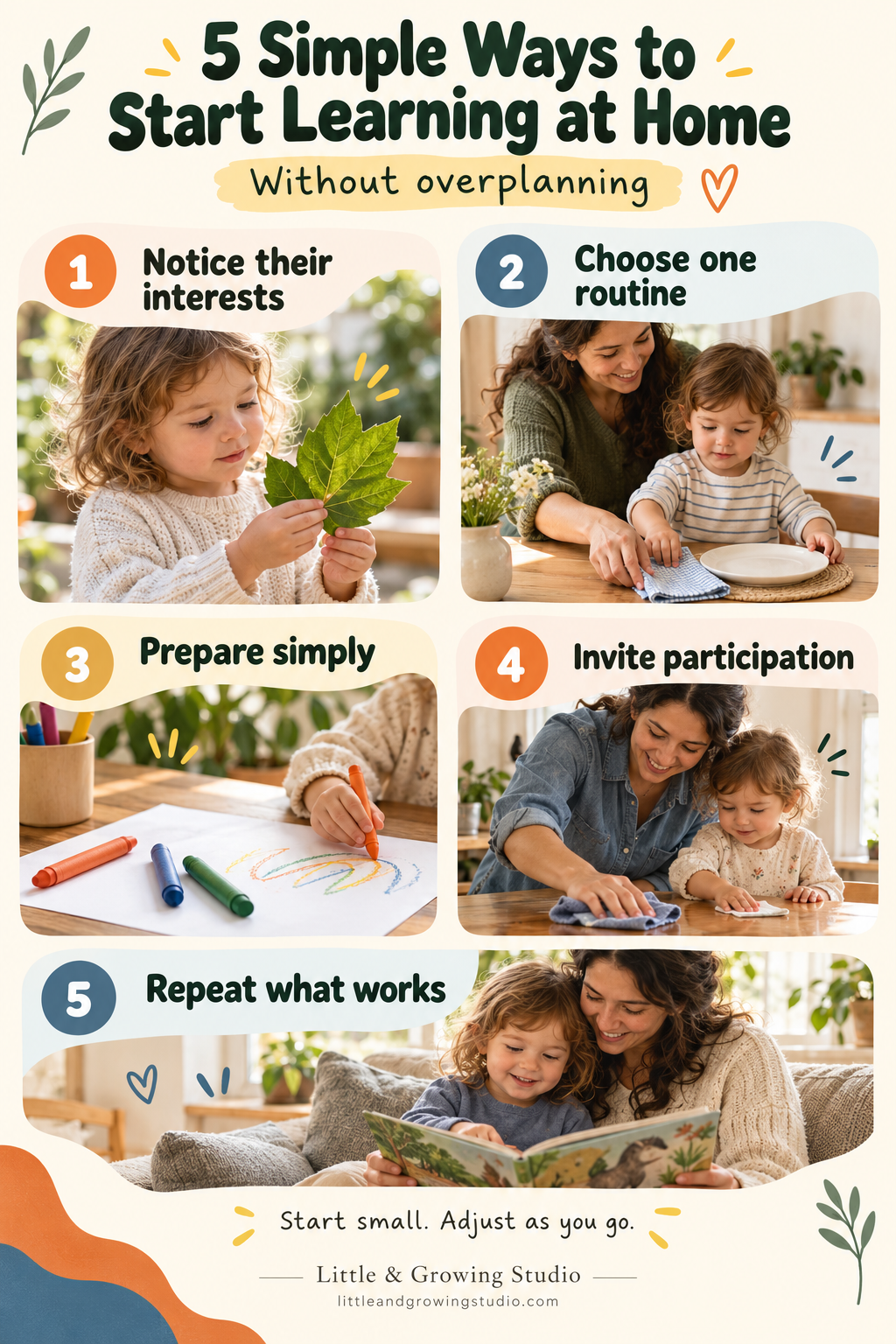
1. Notice What Already Catches Your Child’s Attention 🔎
Before choosing an activity, spend a little time watching.
What does your child return to? What do they point at, ask about, carry around, or try to do themselves?
Perhaps they love putting objects into containers. Perhaps they notice every insect on your walk. Perhaps they want to open and close the same little box several times.
Those interests can help you choose your next invitation.
Try this:
If your child enjoys filling and emptying, offer a few large, age-appropriate objects and two containers.
If they notice plants, invite them to help water one.
If they love a particular story, read it again and leave space for them to point, comment, or join in.
You don’t have to turn every interest into a project. Sometimes, making room for it is enough.
📝 A question to keep in mind:
What has my child been choosing lately?
2. Choose One Everyday Routine 🏡
Instead of planning a full morning of activities, choose one familiar part of your day.
Getting dressed. Preparing a snack. Putting toys away. Reading before rest.
Then ask: “Is there one small part my child could join?”
During snack preparation, they might wash a soft piece of fruit, place napkins on the table, or help carry an empty plate. While putting laundry away, they might match two socks or find their own shirt.
Keep the task suitable for your child, and stay nearby to offer the help they need.
There may be conversation, counting, movement, and problem-solving within the same routine. You don’t need to announce each learning area or ask questions the whole time. Let the shared experience have room to breathe.
✨ Start small: Choose one routine you already do most days. Make one part of it easier for your child to join.
3. Prepare Just Enough to Begin 🧺
A welcoming activity doesn’t need an elaborate setup.
It helps to have the materials ready, the space clear, and a manageable task in mind.
For a table-wiping invitation, that might mean a small damp cloth and one clear section of the table. For drawing, it could be paper and a few suitable crayons. For shared reading, a comfortable place and one familiar book may be all you need.
Before inviting your child, consider:
Can they reach the materials comfortably?
Is the task small enough to try?
Are the materials safe and appropriate for them?
Will I be available for the supervision or help this needs?
Is there an easy place to put everything away?
Try preparing one activity before adding another. You can adjust once you see how it works in your home.
4. Offer an Invitation—and Leave Room for Their Response 💬
An invitation can be wonderfully simple:
“Would you like to help me wipe this spot?”
“I’ve put some paper here if you’d like to draw.”
“Shall we look at this book together?”
Your child might join straight away. They might watch first, try briefly, ask for help, or decline.
That response gives you something useful to notice.
Perhaps they need a smaller task. Perhaps the materials are unfamiliar. Perhaps they’re tired, hungry, or deeply involved in something else.
You can offer again another time, make a small adjustment, or move on with your day.
💛 Watching, trying, pausing, and asking for help can all be part of the experience. A finished product doesn’t have to be the goal.
5. Repeat What Works Before Adding More 🔁
When your child enjoys an activity, you may feel ready to find the next exciting idea.
But you can also offer the familiar one again.
Another reading of a favorite story. Another chance to pour with your help. Another morning of choosing between two outfits.
Repeating an experience gives you both a chance to become more familiar with it. It can also make planning easier: you already know the materials, the setup, and some of the support your child may need.
Afterward, make a brief note if it helps:
“Chose the same book and pointed to the dog.”
“Wanted to wipe a second spot.”
“The container was difficult to open.”
“Tried again after watching me.”
A few words can help you decide what to repeat or adjust. You don’t need a long journal entry after every activity.
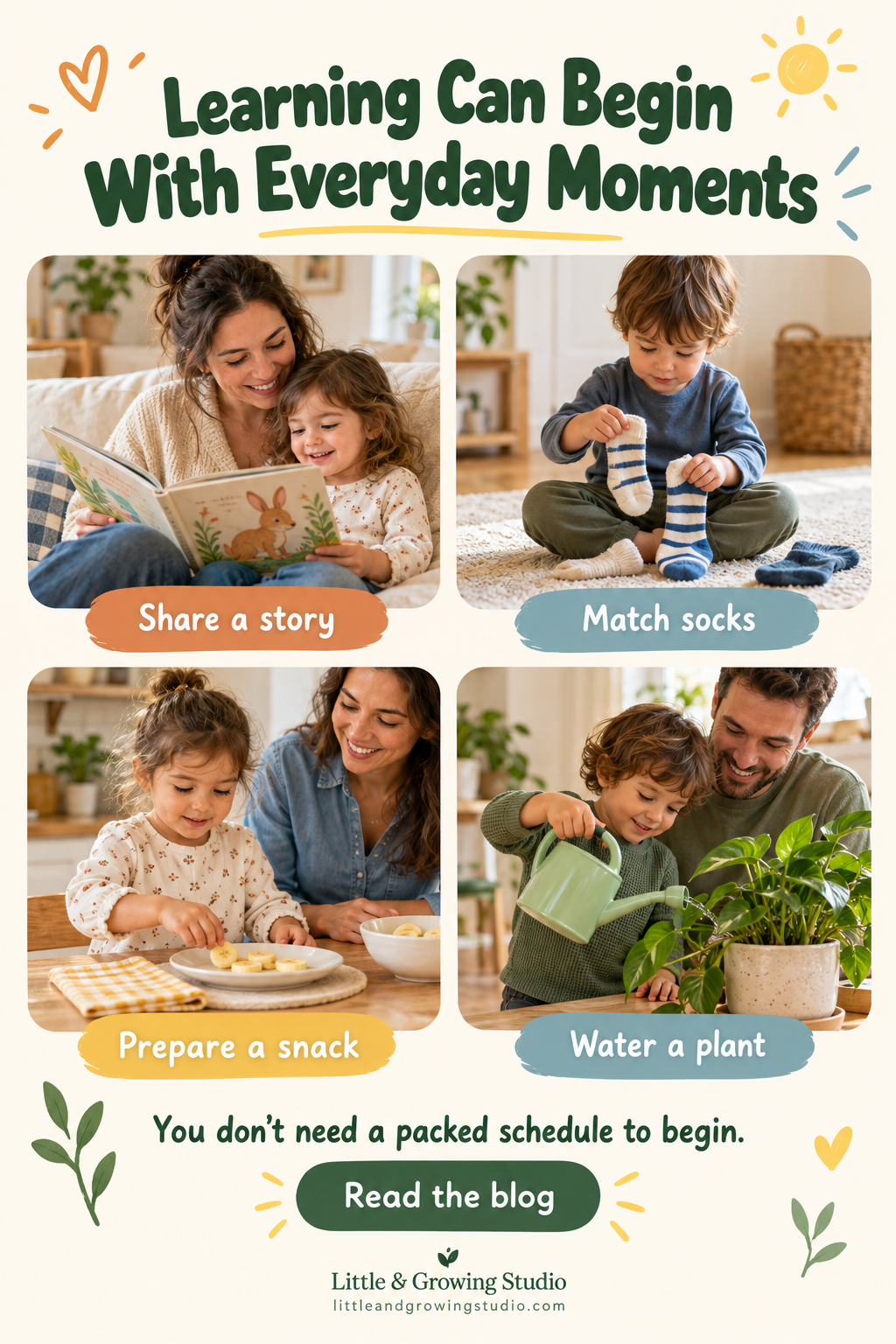
What Could a Simple Learning Day Look Like? ☀️
Here’s one example—not a timetable to follow, but a reminder of how much can fit within an ordinary day.
👕 Getting dressed
Invite your child to choose between two suitable outfits.
🍌 Preparing a snack
Let them help place napkins on the table and talk together about the food.
🧦 Putting laundry away
Find matching socks together. Notice their colors, sizes, or patterns.
🌿 Taking a walk
Pause to notice a leaf, a sound, or a change in the weather. Follow what catches your child’s attention.
📖 Settling down
Share a familiar story and leave room for your child to point, comment, or simply listen.
Some days may include several of these moments. Others may include one shared story and plenty of rest.
You don’t need to cover every learning area every day. Begin with what fits your child and your family. 💛
Want a Little Help Getting Started? 🌱
If you’re ready to take the next step, explore our Free Little Learners at Home Quick-Start Guide (Modules 1–4).
It’s a starting point for parents who want to approach learning at home with more intention, while leaving room for everyday family life.
Take your time, try what feels manageable, and return when you’re ready.
👉 Get the Free Little Learners at Home Quick-Start Guide
Ready to Build on Your First Steps? 📖
You’ve noticed an interest, tried an invitation, or found a routine your child enjoys joining.
What comes next?
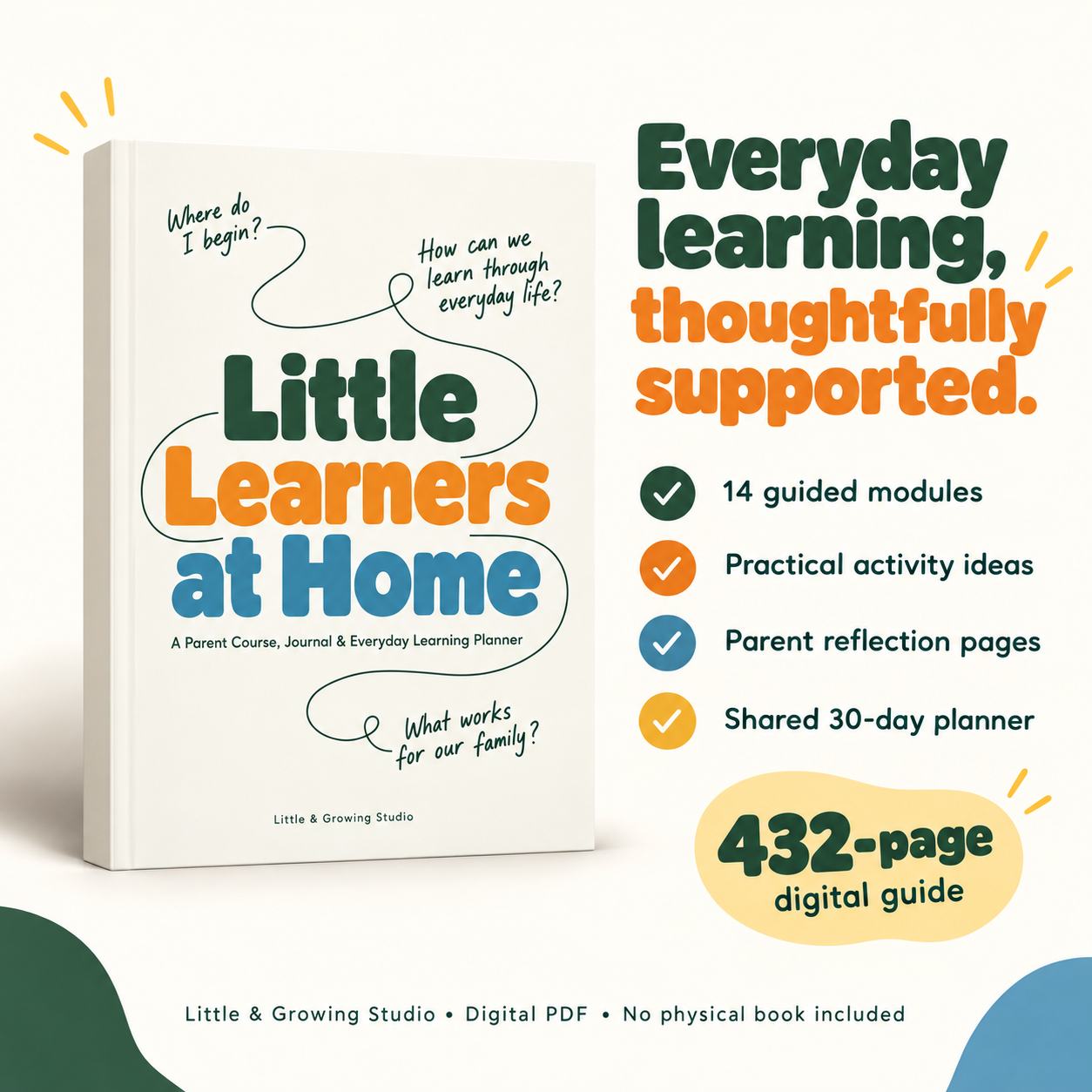
Little Learners at Home brings guidance, reflection, and planning together in one complete digital book, so you have somewhere to return as your family’s needs change.
Inside, you’ll find:
✅ 14 modules covering everyday routines, independence, feelings, and playful learning.
✅ Practical activity ideas for literacy, math, science, nature, movement, and creative play.
✅ Parent reflection pages to help you notice interests and useful support.
✅ 30 recommended books for shared reading.
✅ A shared 30-day learning planner to bring your chosen invitations and brief observations together.
Explore the modules at your own pace and print the pages you need.
👉 Explore Little Learners at Home
This is a 432-page digital PDF. No physical book is included.
Begin With One Small Invitation 💛
You don’t need to have the whole week figured out before you begin.
Choose a familiar moment. Prepare a few materials. Invite your child to join you, and notice what happens.
There will be time to repeat, adjust, and discover something new.
What is one everyday moment you’d like to explore together this week? Share it in the comments—we’d love to hear where you’re beginning.
Little learners grow—and so do we. 🌿
