Where Do I Begin? A Simple Guide to Starting Preschool Learning at Home
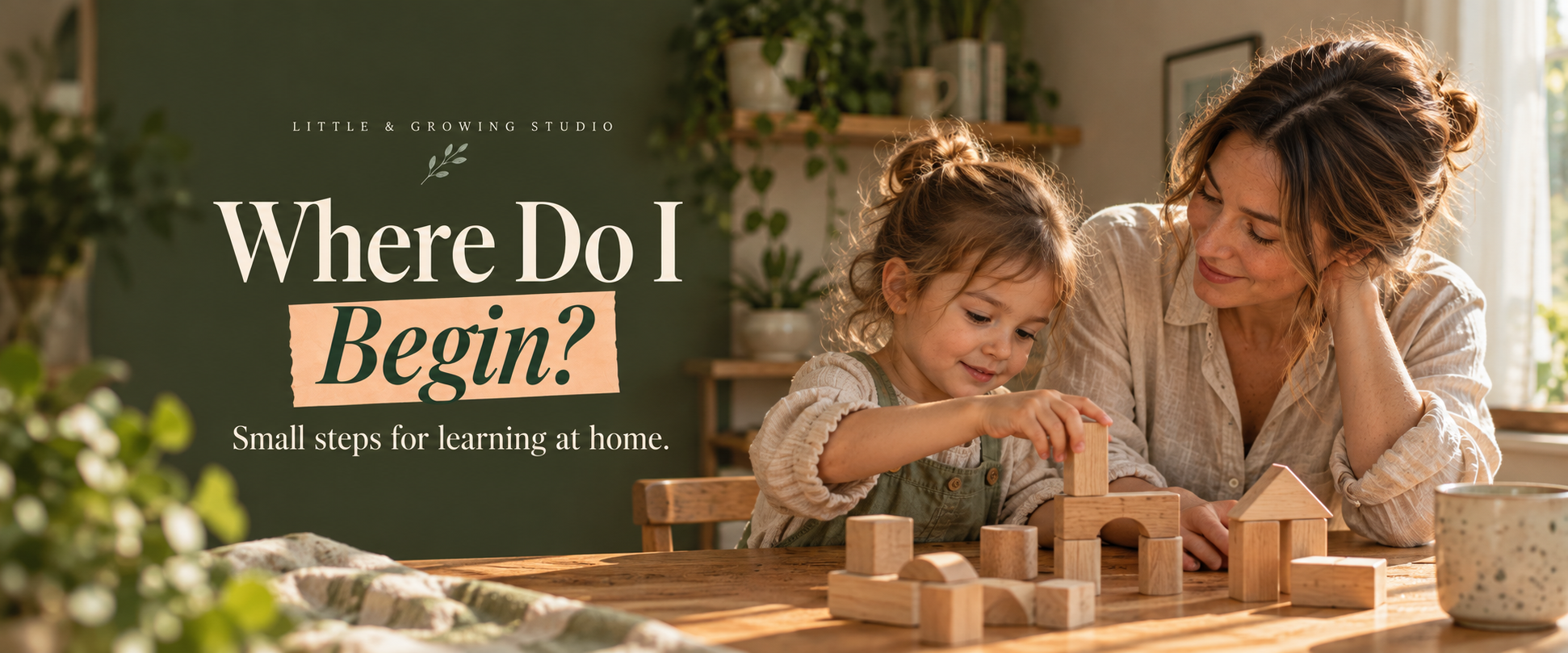
You don’t need every answer before you start. Begin with your child, one familiar moment, and a little curiosity.
Perhaps you’ve been thinking about learning at home for a while.
You’ve saved activity ideas, browsed beautiful learning spaces, and wondered whether you should buy a planner, prepare a shelf, or start teaching letter sounds.
Then comes the question that brings everything to a pause:
“Where do I actually begin?”
It’s an understandable question. When there are so many possibilities, even choosing a first activity can feel like a big decision.
Here’s a reassuring place to start: you can build from the life you already share with your child. A conversation over breakfast, a favorite picture book, or an invitation to help with a household task can give you something meaningful to explore together.
Let’s take that first step. 🌱
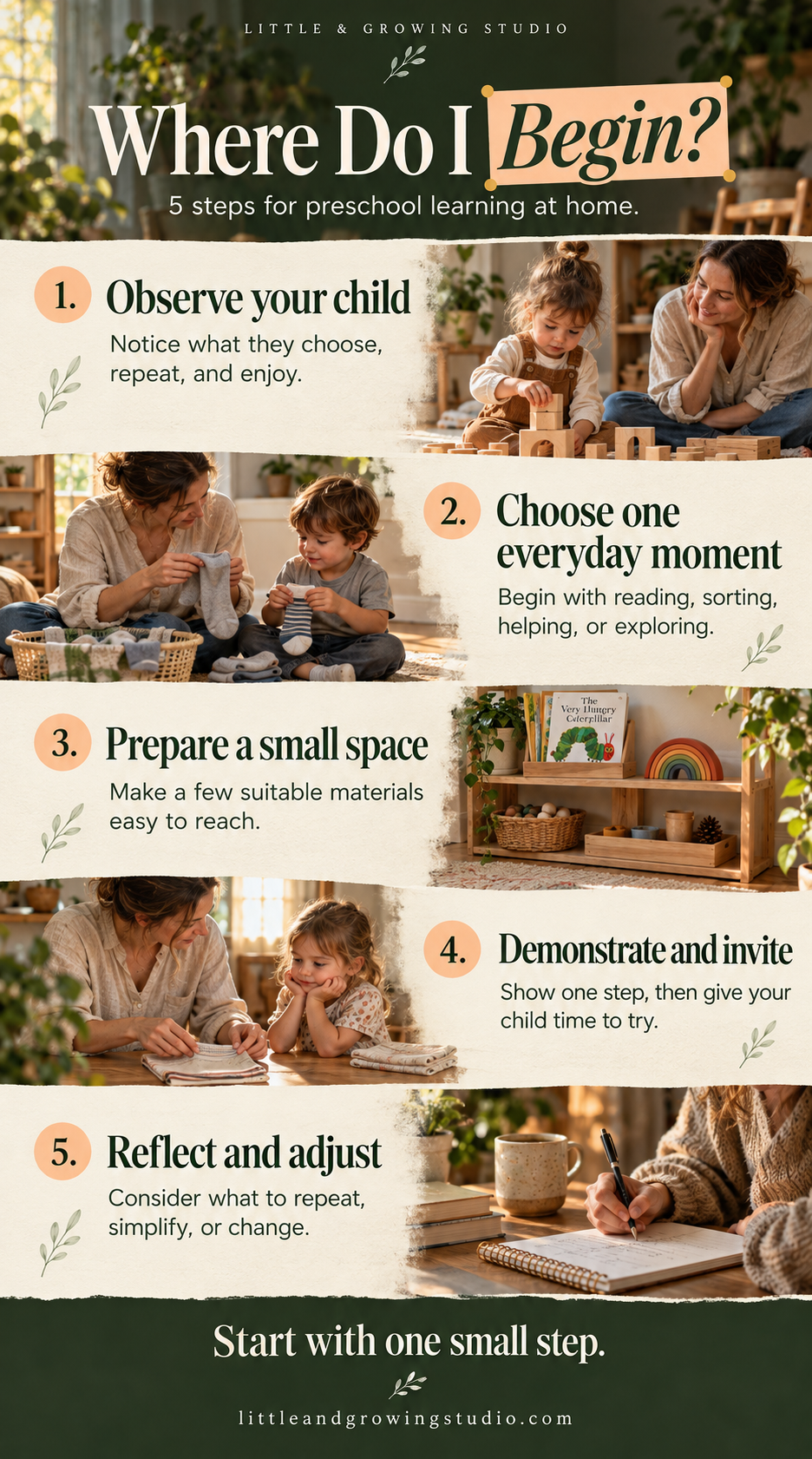
1. Begin with the Child in Front of You
Before choosing activities, spend a little time noticing what your child already enjoys.
Do they return to the same building blocks? Stop to examine leaves on every walk? Ask to help whenever you’re preparing food? Carry a favorite book from room to room?
These moments offer clues about where to begin.
During an ordinary part of your day, consider:
What does my child choose without being prompted?
What do they repeat or spend time exploring?
When do they invite me to join them?
What are they trying to do independently?
You can make a brief note if it helps, but there’s no need to turn observation into another task to complete.
Your goal is to get curious about what captures your child’s attention.
For example, a child who enjoys moving objects between containers might welcome a simple sorting invitation. A child fascinated by neighborhood birds might enjoy looking through a bird picture book together.
Let their interests help you choose your starting point.
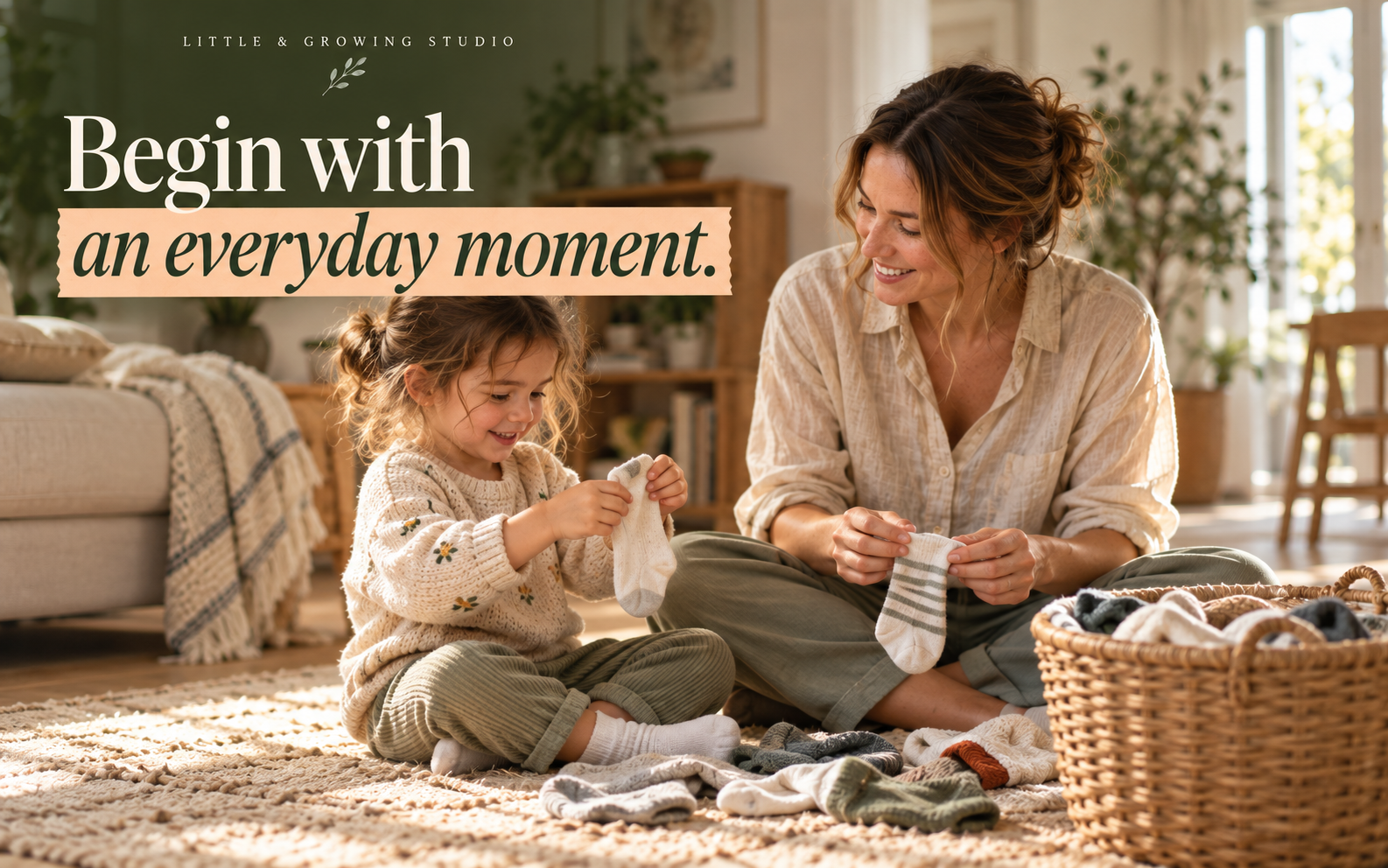
2. Choose One Everyday Moment
Once you’ve noticed an interest, look for one familiar opportunity to explore it.
Everyday routines give you plenty of possibilities—and using a familiar activity can make beginning feel more manageable.
If your child enjoys helping:
Invite them to place napkins on the table or match clean socks. Show one part of the task and let them participate in a way they can manage.
If your child enjoys building:
Sit nearby as they explore blocks. You might describe what you notice: “You put the long block across the top.” Leave room for them to continue their own idea.
If your child enjoys stories:
Choose a favorite picture book. Pause when they point, comment, or ask a question. You don’t need to turn every page into a quiz.
If your child enjoys nature:
Look closely at leaves during a walk. Talk about their colors, shapes, or differences, following what interests your child.
If your child enjoys drawing:
Offer paper and a few suitable drawing materials. Listen if they want to tell you about their marks, and allow the picture to be their own.
Choose just one invitation to begin with. You can revisit it before introducing something new.
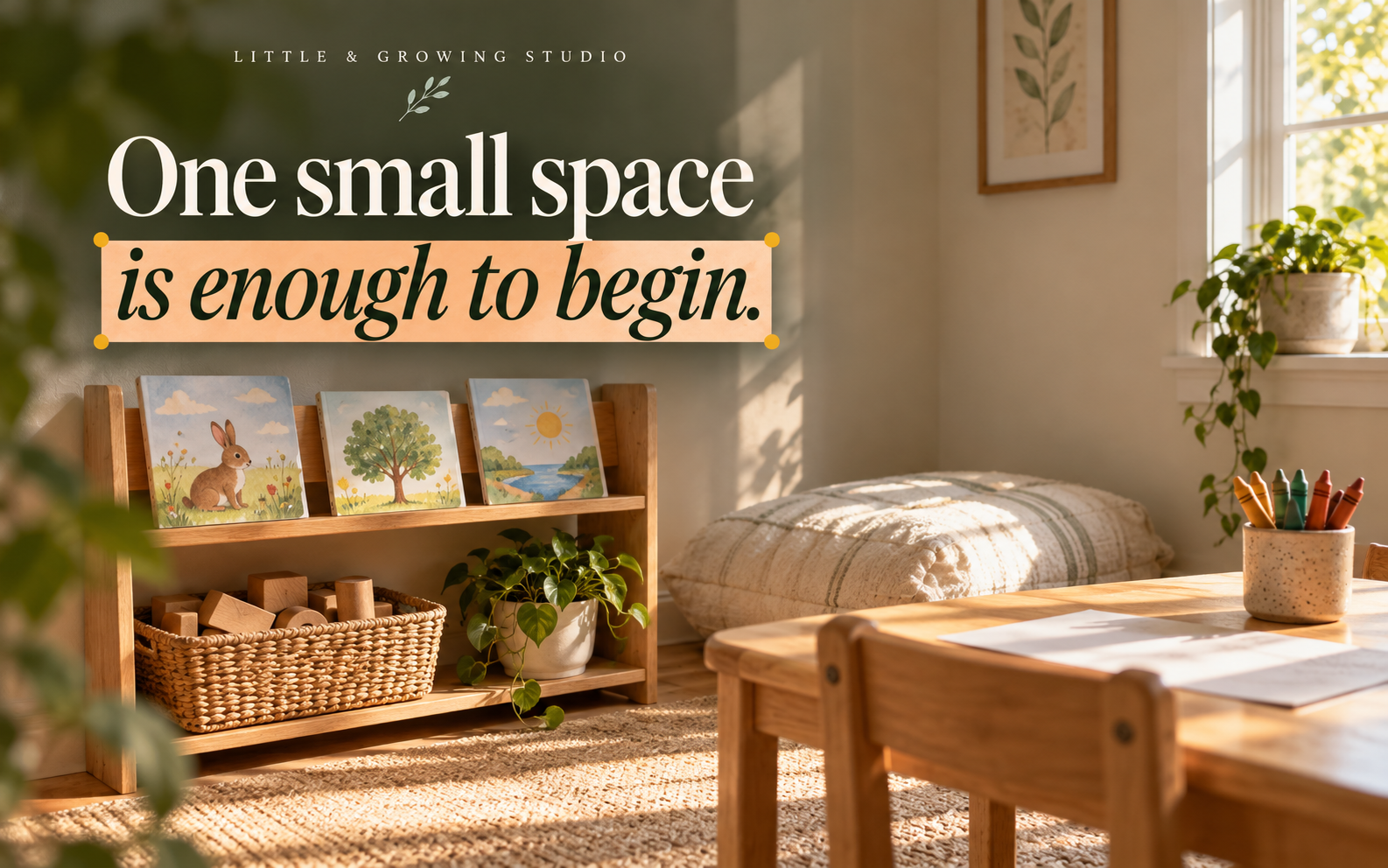
3. Prepare One Small, Accessible Space
A useful learning space can be as simple as a clear surface and a few thoughtfully chosen materials.
Start with a place your child can comfortably use:
A low basket holding a few books.
A clear section of a table for drawing.
A reachable spot for familiar, age-appropriate materials.
A consistent place to return things after use.
Think about the activity you’ve chosen. What does your child need to reach? Is there enough space to use it? Can they help put it away afterward?
For a drawing invitation, you might place paper and crayons together. For shared reading, you could keep a small selection of books beside a comfortable seat.
Make the space useful for the experience you want to offer.
Choose materials appropriate for your child, supervise as needed, and keep small objects or other hazards out of reach.
4. Show One Step, Then Leave Room to Try
When an activity is unfamiliar, a brief demonstration can give your child a place to begin.
Imagine you’re inviting them to fold a napkin.
You might sit beside them, slowly bring one edge toward the other, and place the folded napkin on the table. Then offer another napkin and ask, “Would you like to try?”
Pause.
Your child may copy you, experiment with a different fold, ask for help, or decide to watch first.
You can respond to what happens:
Show the step again if they want another look.
Offer a little help when they ask.
Give them time to work through an attempt.
Put the activity aside if they aren’t interested.
Participation doesn’t need to look exactly as you imagined. A child’s response gives you information about what feels interesting, familiar, or challenging that day.
5. Reflect Before Adding More
Afterward, take a moment to consider the experience.
Keep your reflection simple:
What interested my child?
Perhaps they enjoyed choosing the materials more than using them.
Where did they need support?
Maybe the container was difficult to open or your demonstration moved too quickly.
What might we try again?
You might repeat the same activity, simplify one step, or follow a new interest that appeared.
These observations can help you decide what comes next.
If your child enjoyed matching socks, you could offer it again the next time you sort laundry. If they lost interest in a book, you might choose a different one or read at another time.
A learning routine can develop through these small adjustments.
Your First Step Today ☀️
For today, choose one ordinary moment you already share.
Notice what your child is interested in. Prepare what you need. Offer an invitation, then give them time to respond.
You could begin with:
“Would you like to help me set out the napkins?”
Or:
“You’ve been looking at those leaves. Shall we take a closer look?”
Or simply:
“Which book would you like us to read?”
You can decide on the next step after you’ve experienced this one together.
A Little Guidance When You’re Ready
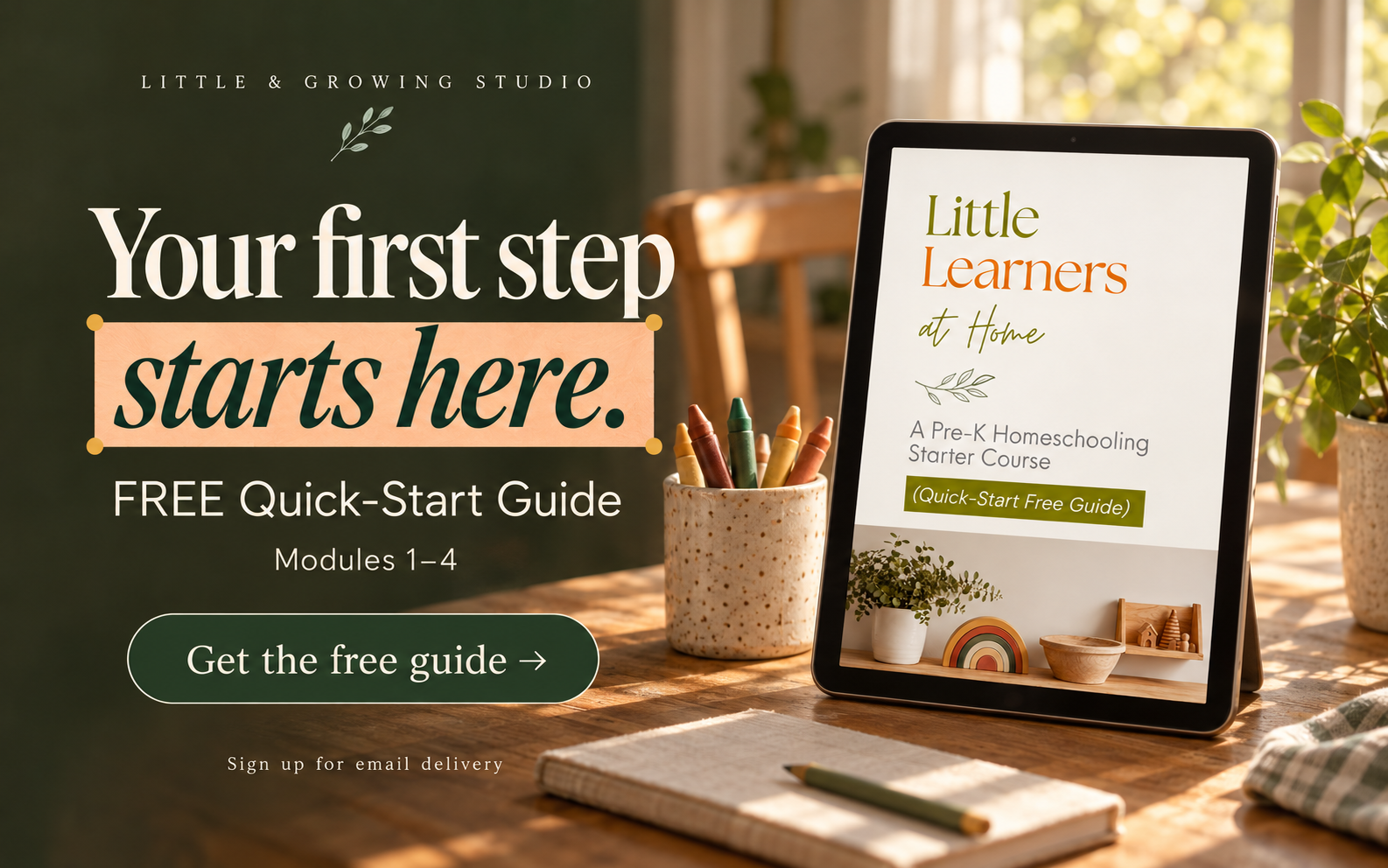
If you’d appreciate something to read and return to as you begin, our FREE Little Learners at Home Quick-Start Guide is a helpful next step.
Begin with the first four modules of Little Learners at Home—a practical introduction to noticing your child’s interests, preparing your space, and guiding everyday learning.
Explore at your own pace, reflect on what fits your family, and choose one small step to try.
Explore the Complete Little Learners at Home Guide
For parents who would like to continue, Little Learners at Home brings together 14 guided modules, parent reflection pages, and a flexible 30-day planner in one digital PDF.
Use the guide to explore ideas, record observations, and consider what fits your family’s everyday learning experiences. Return to the sections you need as your interests and routines develop.
This is a digital PDF resource. No physical book is included.
With care,
Little & Growing Studio
Helping little learners grow, one meaningful moment at a time.
