
Little Hands, Big Skills: 5 Easy Montessori Snack-Making Trays for Kids
Transforming snack time into a child-led activity is one of the simplest, most rewarding ways to nurture independence, fine motor control, and confidence at home. Using the classic Montessori tray system, you provide your child with everything they need—pre-portioned, organized, and sized just right for small hands—empowering them to complete their snack entirely on their own.
"Never help a child with a task at which he feels he can succeed." — Maria Montessori
Why the Montessori Tray System Works
Instead of handing your child a finished plate, a prepared tray invites active participation, curiosity, and practical life learning:
Defined Workspace: A small tray or cutting board clearly marks their prep area and keeps inevitable spills contained.
Child-Sized Tools: Mini spreaders, child-safe butter knives, and blunt skewers build dexterity safely and effectively.
Built-In Autonomy: Pre-portioned ramekins give little ones total control over their choices and portions without overwhelming them.
Focus on Process: Snack prep becomes an engaging sensory rhythm where building confidence matters far more than visual perfection.
5 Appealing Snack Trays Little Learners Love
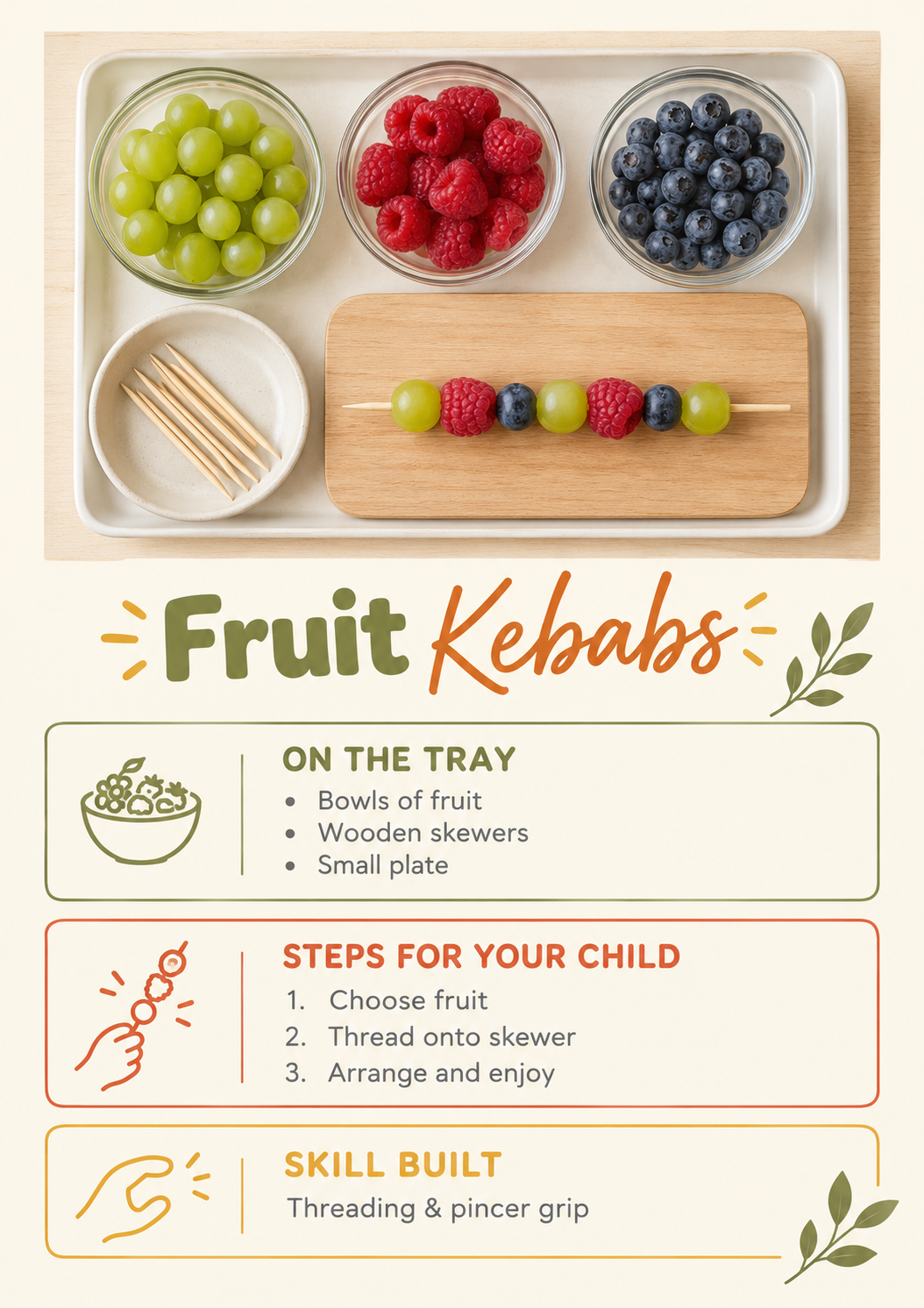
1. Rainbow Fruit Kebabs
The Experience: A bright, sensory-rich tray featuring colorful berries and grapes that turns snack prep into an exciting threading challenge.
Why It’s Great: Threading soft fruit onto skewers refines the pincer grasp and builds bilateral hand coordination while letting your child explore vibrant colors and textures.
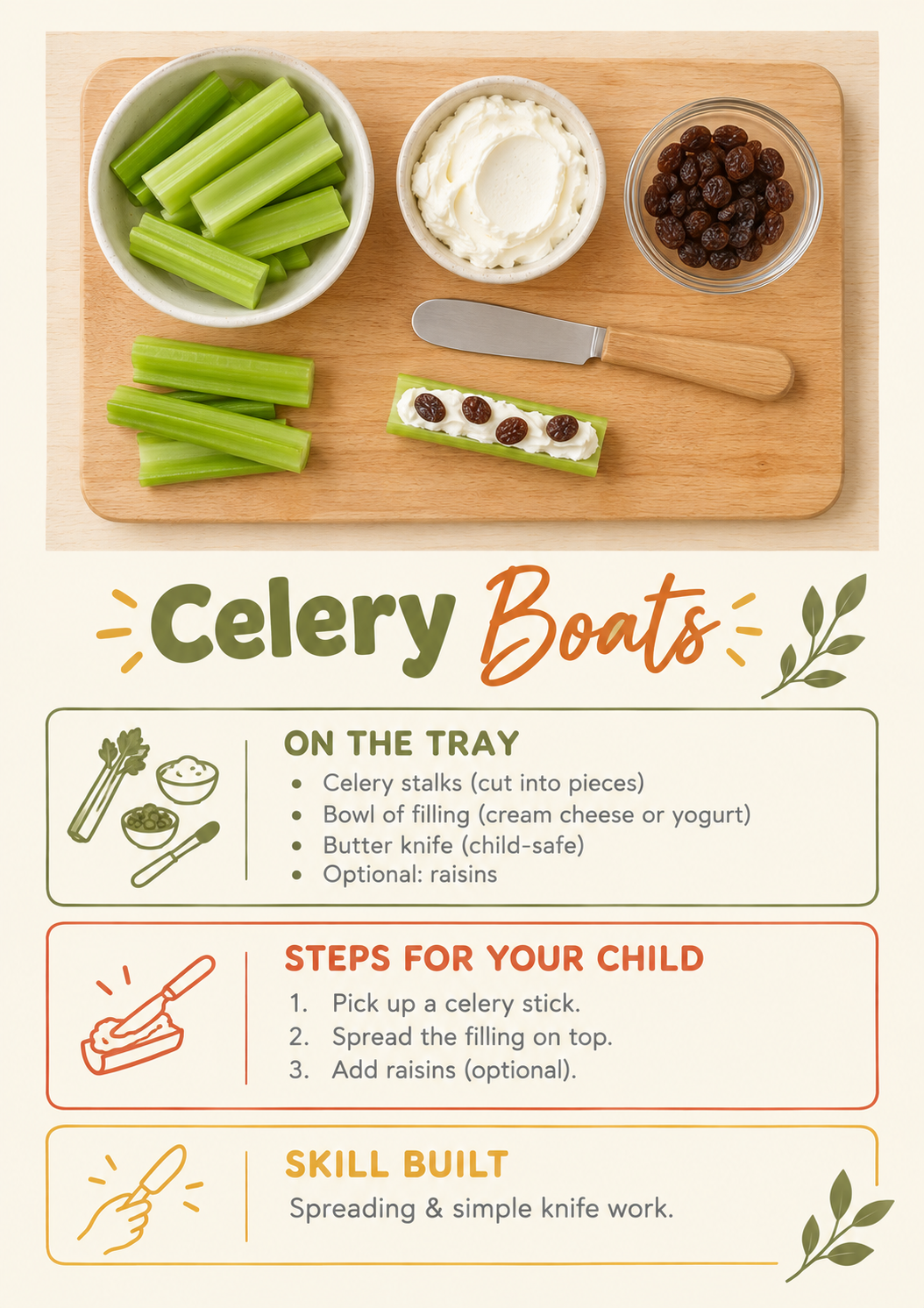
2. Crunchy Celery Boats
The Experience: Crisp, fresh celery stalks paired with rich cream cheese or yogurt and topped with sweet raisins for a playful "ants on a log" experience.
Why It’s Great: The deep groove of the celery provides natural boundaries for little hands practicing smooth knife spreading and precise finger placement.
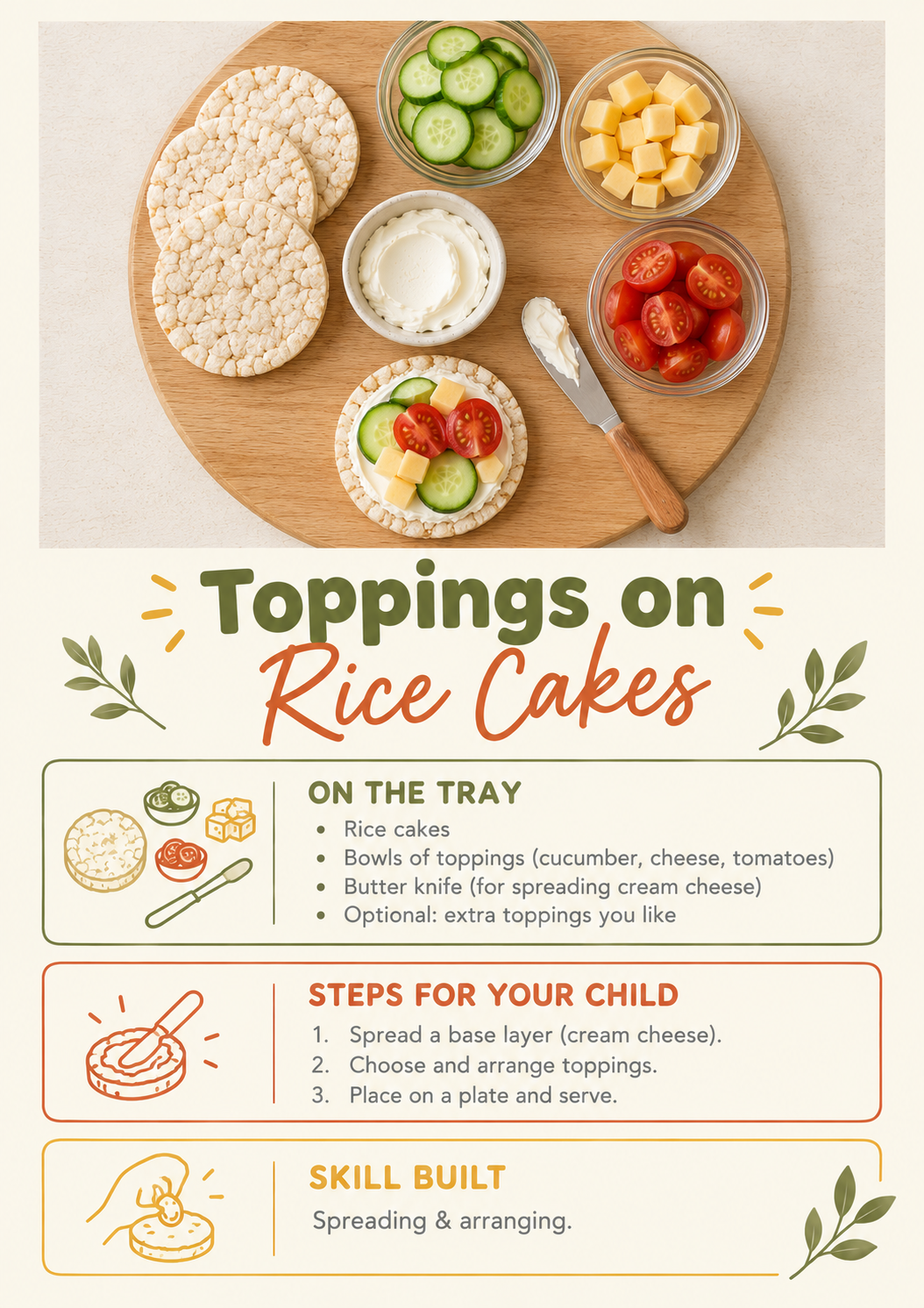
3. Savory Rice Cake Canvas
The Experience: Light, crunchy rice cakes served as an edible open canvas, accompanied by creamy spreads and vibrant slices of cucumbers, cheese cubes, and juicy cherry tomatoes.
Why It’s Great: This tray encourages spatial awareness and artistic creativity as children spread their base and arrange colorful shapes into one-of-a-kind designs.
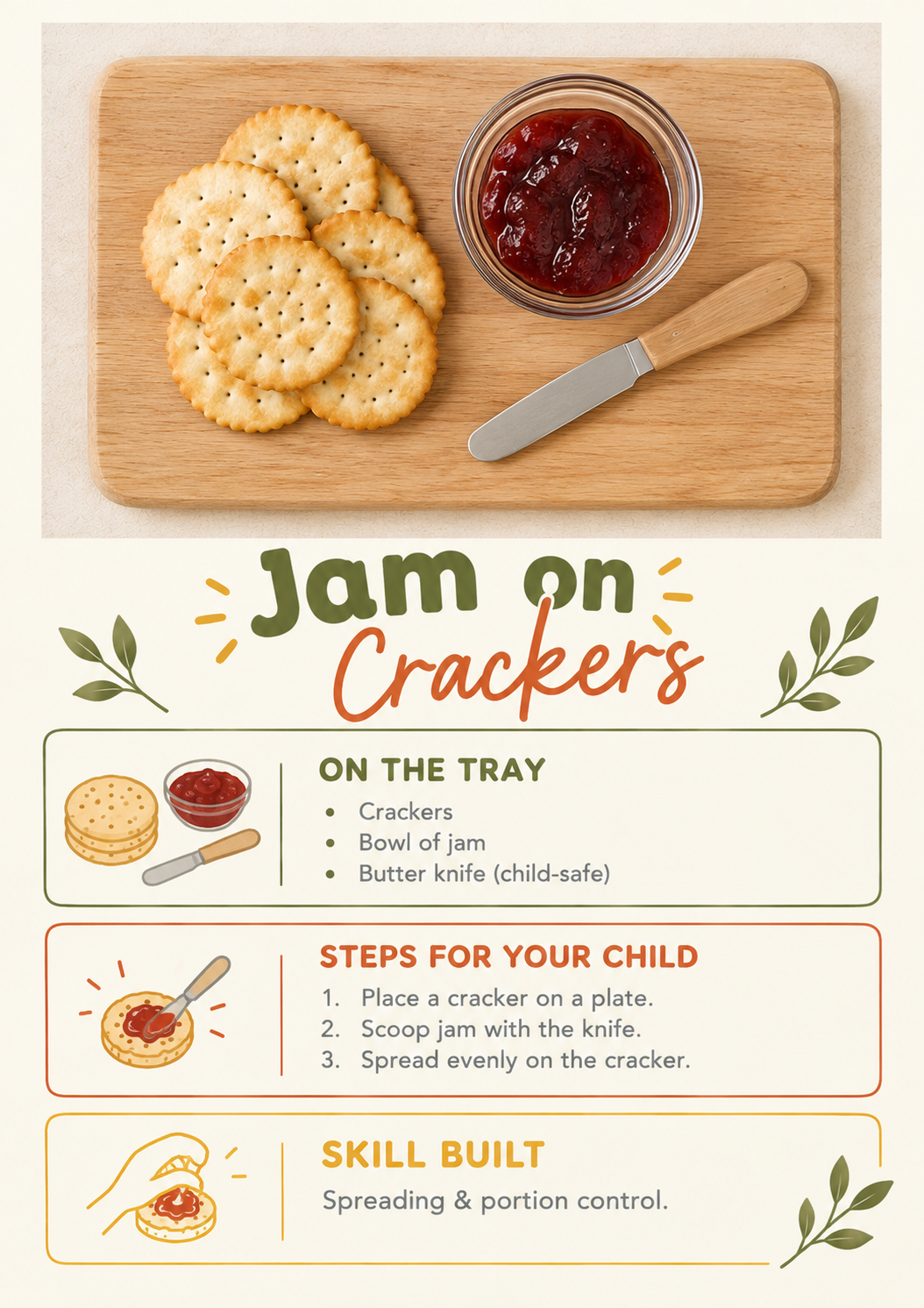
4. Sweet Jam & Crisp Crackers
The Experience: Golden, flaky crackers presented with a ramekin of glossy fruit spread and a toddler-friendly spreader.
Why It’s Great: Spreading across delicate crackers teaches children pressure regulation—learning just how much force to apply without crumbling the cracker beneath.
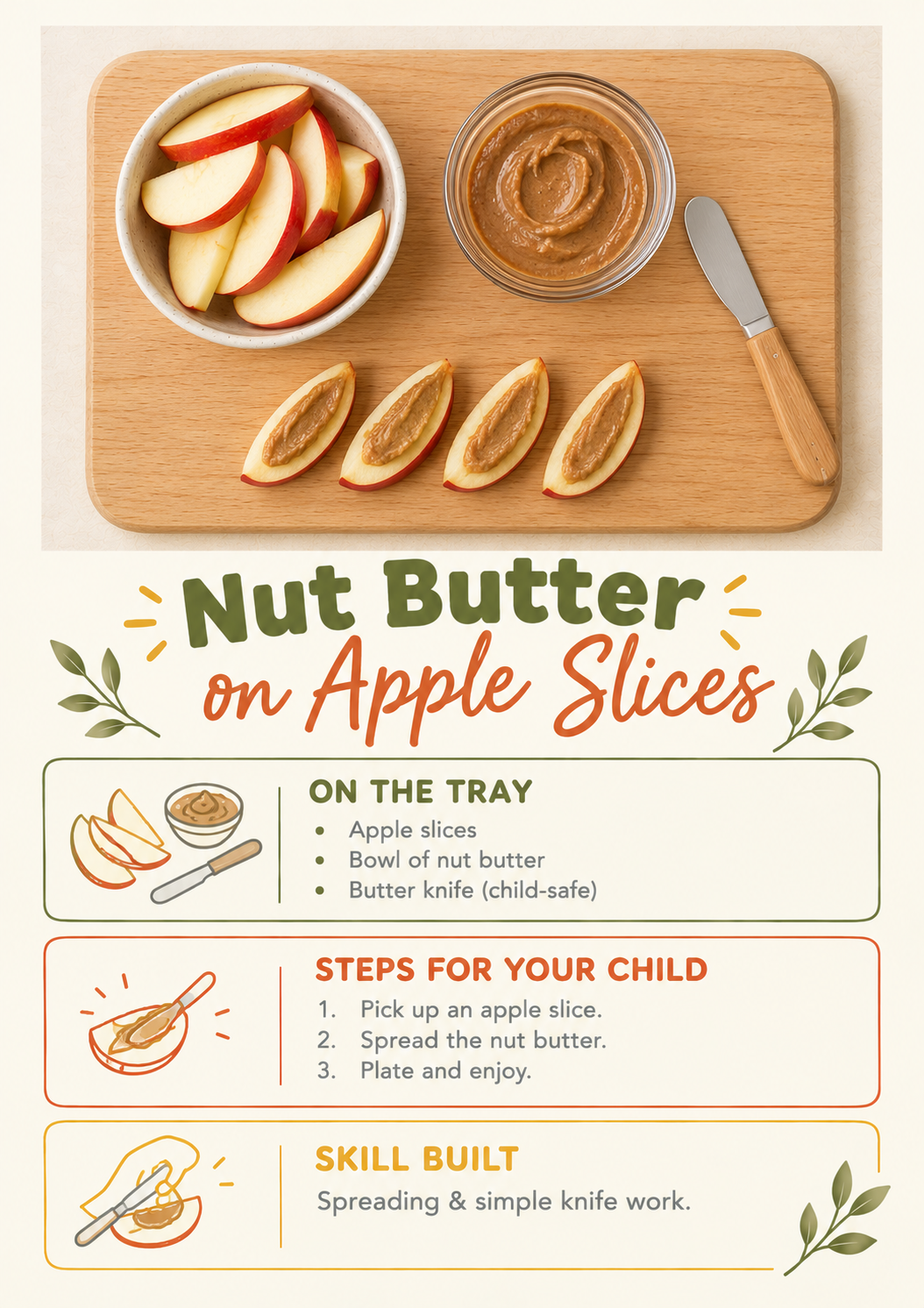
5. Nut Butter & Crisp Apple Smiles
The Experience: Crisp, sweet apple wedges ready to be layered with creamy seed or nut butter for a satisfying, nutrient-dense treat.
Why It’s Great: Navigating the curved slope of an apple slice offers a fun, rewarding challenge that develops hand stabilization and two-handed coordination.
Get the Complete Parent Guide (Free!)
Ready to bring calm, independent snack routines into your daily rhythm?
We have put together a printable, full-color guide containing step-by-step visual breakdowns, equipment setup checklists, and practical tips to ensure your child succeeds from day one.
