Can a Preschooler Make Their Own Snack? (Spoiler: Yes, and It Changes Everything!)
“I’m hungry!”
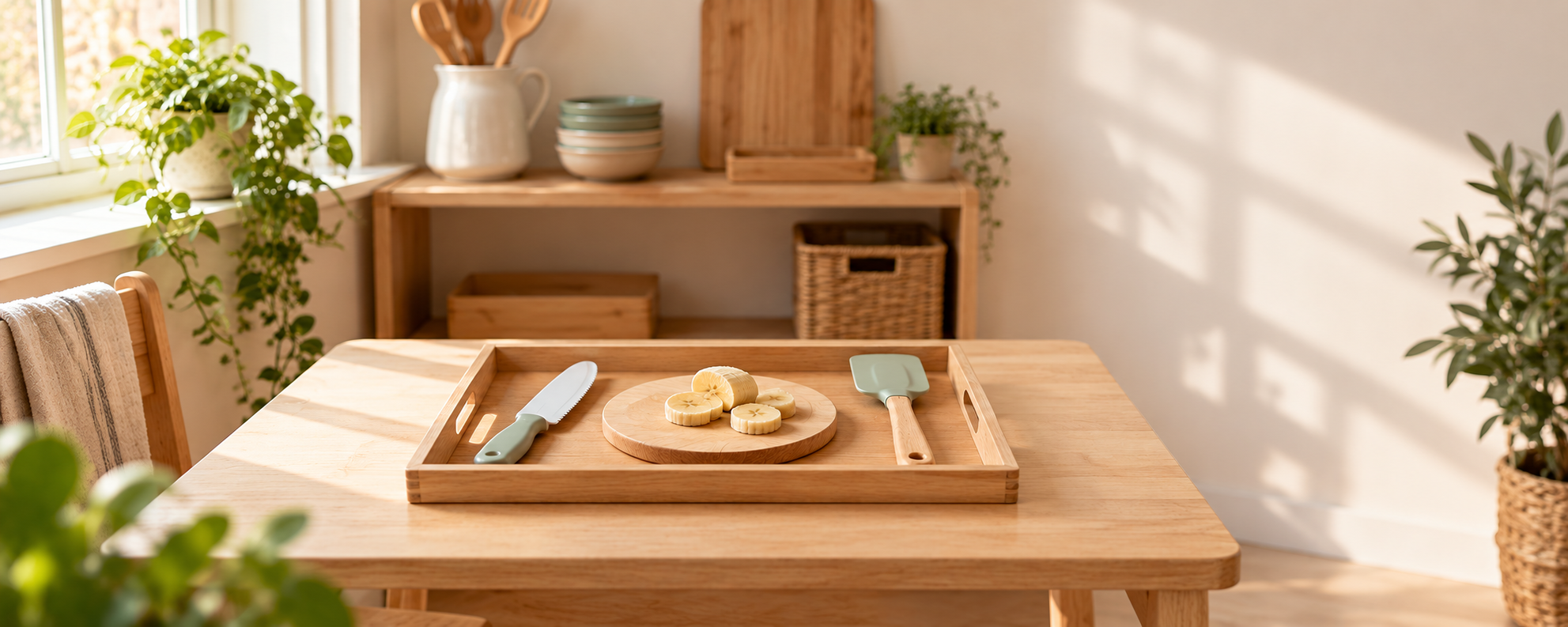
If you have a toddler or preschooler at home, you probably hear this phrase multiple times a day. Our natural instinct as parents is to drop whatever we are doing, chop the fruit, spread the toppings, and serve it on a plate.
What if snack time became one of the most powerful learning moments of your child’s day?
With the Montessori Tray System, snack preparation shifts from a daily chore into a purposeful, hands-on activity that fosters independence, confidence, and foundational life skills.
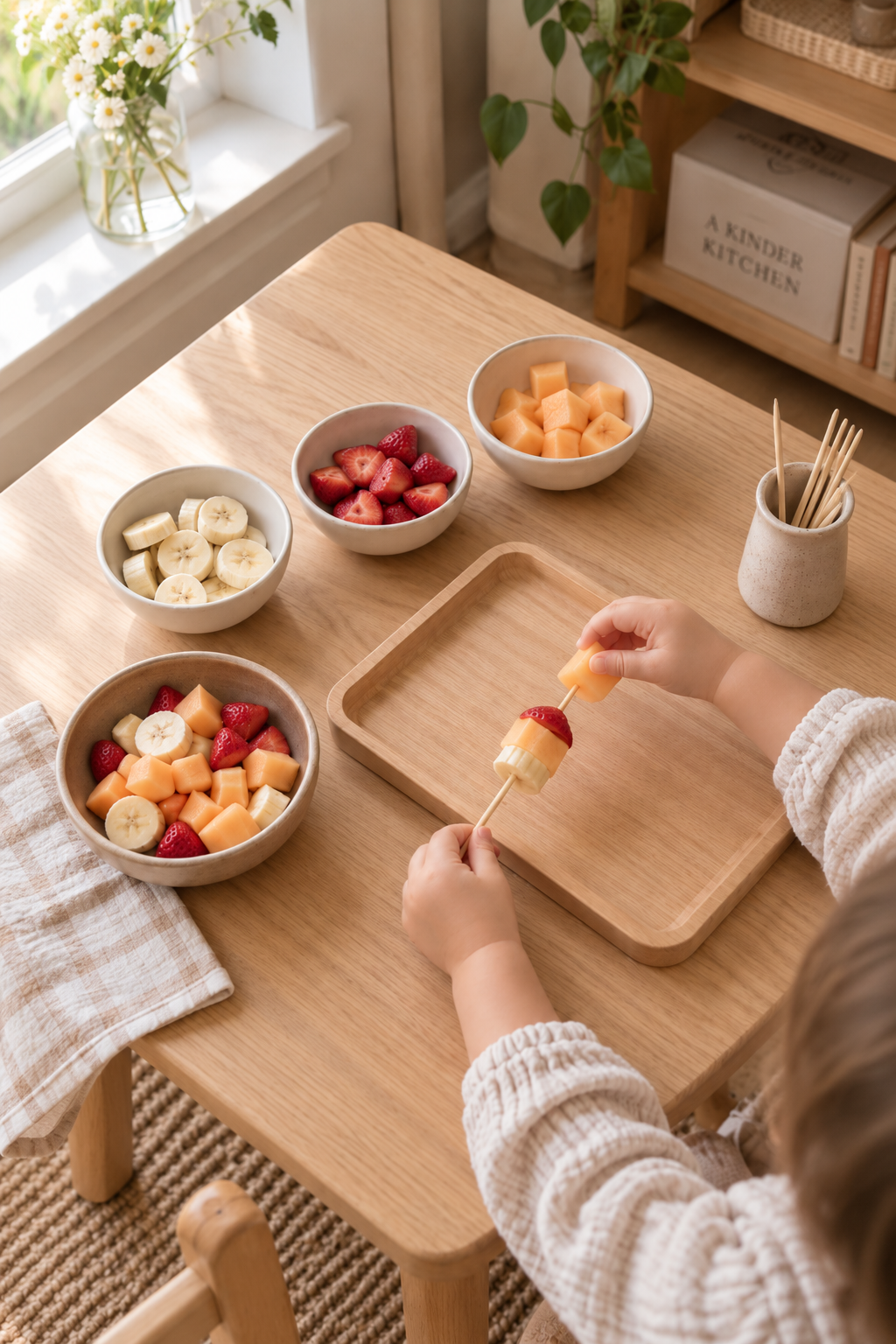
What is the Montessori Tray System?
The tray system is a simple, structured method where all the materials, ingredients, and tools needed for a single task are arranged on one child-sized tray or cutting board.
Instead of opening a chaotic pantry or using oversized adult utensils, your child receives a clear, self-contained workspace. Everything is pre-portioned into small bowls or ramekins, and tools are matched specifically to small hands.
The beauty of this setup lies in its boundaries:
Defines the Workspace: The tray visually anchors the activity and naturally contains spills.
Encourages Completion: Having all components laid out allows the child to carry out the entire sequence from start to finish without adult intervention.
Builds Order and Predictability: Repeating the same familiar setup creates an intuitive routine your child can eventually manage all on their own.
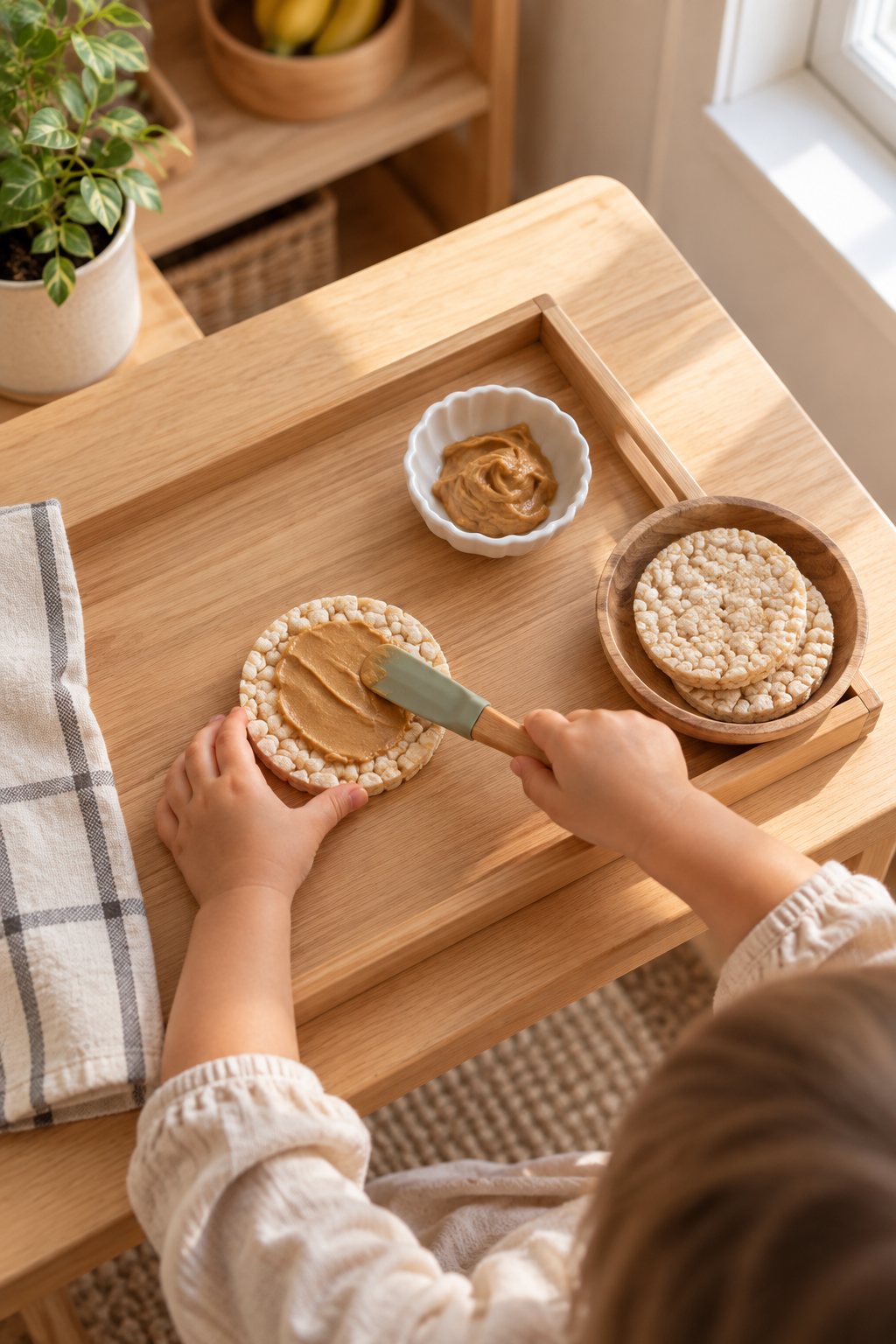
Why Self-Prep Matters: Beyond Just Making Food
When children prepare their own food, they are not just making a snack—they are building neural connections and mastering critical developmental milestones:
Fine Motor Dexterity: Spreading, threading, dipping, and pinching strengthen the small muscles in the fingers and hands, directly preparing little hands for pencil grip and writing.
Hand-Eye Coordination & Bilateral Integration: Stabilizing food with one hand while manipulating a spreader or tongs with the other requires sophisticated brain-body coordination.
Executive Function & Sequencing: Following a set order of steps—spreading a base layer, choosing toppings, plating—builds planning skills, patience, and working memory.
Autonomy & Food Confidence: Children who actively participate in preparing their food are far more likely to try new textures and develop a positive, adventurous relationship with eating.
Patience and Resilience: The goal is not a picture-perfect snack, but the confidence that comes from working through a task at their own pace.
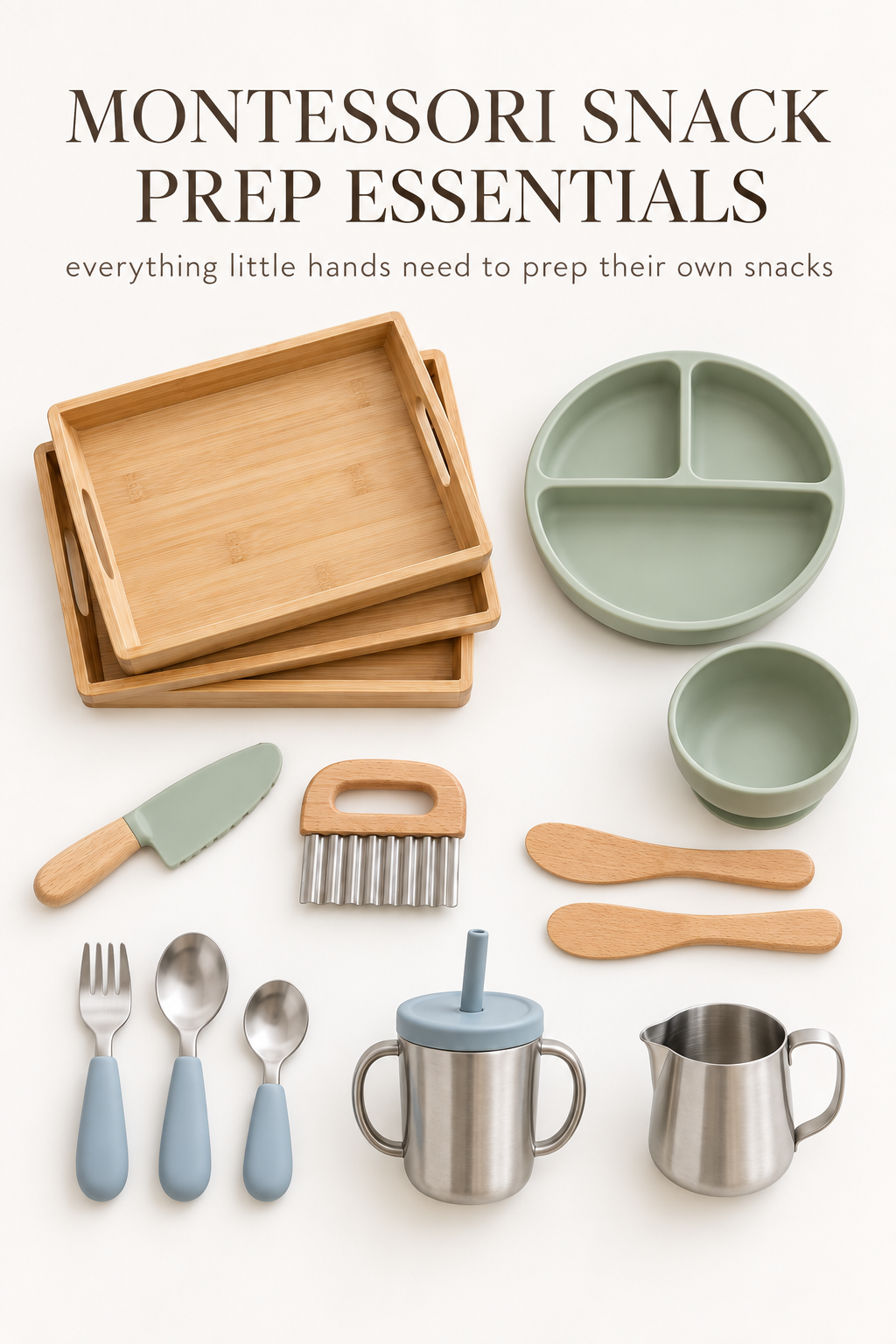
Recommended Snack Prep Essentials
Setting up a child-led station requires functional, properly sized tools and tableware. Below are top-rated essentials for small hands available on Amazon:
3 Pack Bamboo Serving Trays with Handles: Lightweight wooden trays with cutout handles that define the child's workspace, catch accidental spills, and make carrying prep items easy.
Kids Montessori Kitchen Tools Safe Knives Set: Features rounded-edge knives and crinkle cutters tailored for small hands to practice slicing and meal prep safely.
Molain 6Pcs Wooden Butter Knife Spreaders: Offers lightweight wooden blades that are ideal for spreading jams, hummus, and nut butters without sharp edges.
4 Pcs Porcelain Kid Suction Plate and Bowl Set (Blue/Green): Durable porcelain dishware complete with non-slip silicone suction sleeves, perfect for keeping dishes steady while little hands scoop, spread, and arrange snacks.
Elk and Friends Toddler Silverware with Silicone Handles: Ergonomic stainless steel utensils with soft, grippy handles sized for developing hands.
CUPKIN 8 oz Stackable Stainless Steel Sippy Cups: Insulated toddler cups with spill-resistant silicone straws and lids designed for independent drinking.
Montessori Small Milk & Water Pouring Pitcher: A lightweight stainless steel jug designed specifically for little hands to practice two-handed pouring.
The Quick Setup Checklist
[ ] Bamboo Activity Tray: Defines the workspace and catches spills while remaining easy for little hands to carry[cite: 1].
[ ] Kid-Safe Knives & Choppers: Sized for small hands to practice slicing and chopping safely[cite: 1].
[ ] Wooden Butter Knife Spreaders: Blunt, lightweight blades ideal for spreading dips, jams, and nut butters[cite: 1].
[ ] Suction Plate & Bowl Set: Stays firmly in place to prevent tipping while scooping or spreading.
[ ] Toddler Utensils: Soft-grip forks and spoons sized for small hands.
[ ] Storage Mason Jars / Lock Containers: Keeps pre-portioned ingredients accessible and fresh[cite: 1].
[ ] Toddler Drinking Cups & Straws: Easy-to-hold cups for independent drinking.
[ ] Mini Pouring Pitcher: Sized for practicing controlled, two-handed water or milk pouring.
Ready to Start? Download the Free 5-Day Self-Prep Snack Guide!
Want a step-by-step plan to introduce child-led snack making without the overwhelm?
We have designed a Free 5-Day Montessori Snack Guide featuring five fun, toddler-approved snack setups. Each day targets a specific fine-motor skill—complete with exact tray arrangements, visual steps, and practical parenting tips to foster true independence at home.
